

Tropical Traditions was founded in 2002 by Brian Shilhavy. The business name was changed to Healthy Traditions in 2017.
Who Is Brian Shilhavy?
Brian W. Shilhavy, BA, MA
Brian Shilhavy earned his Bachelor of Arts degree in Bible/Greek from Moody Bible Institute in Chicago, and his Master of Arts degree in linguistics from Northeastern Illinois University in Chicago.
He is currently the CEO of Healthy Traditions, Inc., and the Editor of Health Impact News.
Brian has lived in Turkey and Saudi Arabia as an English professor in the past.
After the first Gulf War under President Bush, Brian served as a translator in the Kurdish relief programs implemented in northern Iraq, by running a base in southeastern Turkey, serving as a translator as he was fluent in Turkish by that time. He was responsible for bringing in supplies and medical professionals who went down into northern Iraq to deal with the Kurdish refugees.
While living in Saudi Arabia in the early 1990s, Brian began to develop computer programming skills and developed computer teaching software for English language learning at the University level.
These computer programs were designed to adapt to the students’ language skills, based on their answers to questions, moving to higher levels once a student accomplished certain levels of English proficiency.
These kinds of programs would be called “artificial intelligence” today, and Brian had his work published in certain journals in the emerging field of computer aided language learning.
After returning to the U.S. in 1995, Brian became a Microsoft Certified Trainer and a Microsoft Systems Engineer in networking.
In 1998 Brian returned to the Philippines with his Filipino wife and their three children and renovated his wife’s old family farmhouse. By this time the coconut industry was severely depressed due to the negative U.S. campaigns against tropical oils in the 1980s and 1990s. Coconut farmers could no longer support their families on the income generated from harvesting coconuts.
Who Were the First Ones to Import Virgin Coconut Oil into the U.S. Market?
Tropical Traditions (today “Healthy Traditions”) was the first company to import a Virgin Coconut Oil from the Philippines into the U.S. market in 2001.
Brian learned much about the way the older Filipino generation approached health, using native herbs and fruits to deal with common illnesses. One thing that intrigued Brian was that the older generation was very active, often still farming, and yet their only dietary oil was coconut oil, often handmade the traditional way.
This led Brian to investigate the whole issue of fats and oils. He soon discovered that coconut oil had a long tradition of being a healthy oil and that it was wrongly accused of being bad in western countries simply because it was a saturated fat. Politics were the main reason coconut oil fell out of favor in western countries like the U.S.—not science.
So Brian’s family started making it themselves using the traditional method the older generation used. Brian put their Philippine products up on the Internet in 2000, thinking that their Philippine herbs would be their most popular product line.
Before long, however, demand for the traditional method of making coconut oil by hand overwhelmed them. The coconut oil revolution had begun.
When they applied for permission to export their Virgin Coconut Oil from the Philippines from the Philippine Coconut Authority (PCA), the export license was 001.
Brian Shilhavy was the first one who developed the standards on how to define “Virgin Coconut Oil.”
Even the Philippine Government copied much of Brian’s research on coconut oil for their government websites at that time, after sales began to take off in the United States, creating a demand for this new product that Brian Shilhavy developed while living in the Philippines.
Today, a person can walk into almost any store selling groceries and purchase coconut oil, thanks to the work of Brian Shilhavy in the early 2000s, when only two companies in the entire U.S. sold coconut oil, and NOT a virgin coconut oil.
How Are Products Chosen for Healthy Traditions?
Later, when Brian’s family was forced to leave the Philippines because terrorists tried to kidnap him, they had to adapt their eating and lifestyle from living in a rural agricultural area of the Philippines, where they had access to a local public market and fresh farm goods produced in their community and the areas surrounding it, to buying food on the shelves of stores where they had little or no knowledge of those who produced the food.
As they settled back into life in the United States, Brian sought out healthy food sources that he felt they could trust to meet the nutritional and health needs of his family.
Finding good food sources and healthy products is an ongoing endeavor, and the products sold through Healthy Traditions are the products Brian has trusted to meet the needs of his own family. He won’t sell you products that he wouldn’t use personally or give to his own family.
Healthy Traditions has a strong commitment to small-scale traditional farming, where the food they sell can be traced back to those who produced it.
Why Are Healthy Traditions Products Not Certified Organic?

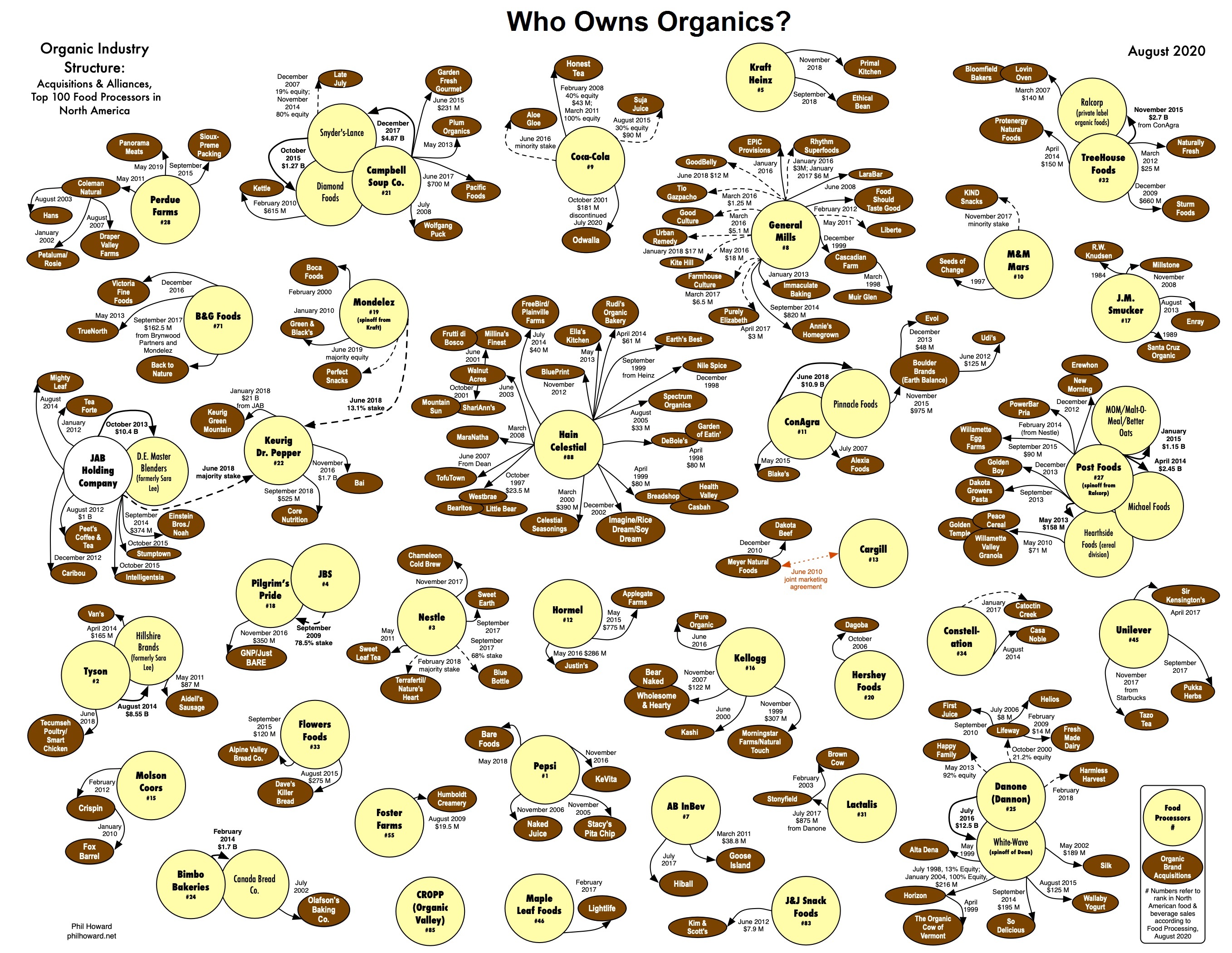
Healthy Traditions began to test their USDA certified organic products in 2014, to see if they were contaminated with the herbicide glyphosate.
They were shocked to find out that most of their certified organic grains were all contaminated with glyphosate, and their certified organic corn was also contaminated with GMO DNA.
And the most surprising thing they learned, was that these products did not even violate the standards of the USDA NOP (National Organic Program), because the NOP allowed trace amounts of herbicides and pesticides that were approved by the EPA, due to “drift” from non-organic crops.
So they abandoned the USDA organic standards and developed their own standards, and started testing all their products for glyphosate, and also for GMO DNA if there were equivalent products in the market approved for sale as genetically modified, especially corn.
Click or tap to expand.
Do Other Companies Test All of Their Food for Glyphosate and GMOs?
As far as we know, Healthy Traditions is the only company in the U.S. that tests all of their branded products for the presence of glyphosate or GMOs, and we have been doing it for over 12 years now.
Most companies who claim to be “glyphosate free” make this statement based solely on the fact that they are USDA certified organic, which prohibits the use of glyphosate.
But most of these companies do not actually test their products to verify if, in fact, they are free from the presence of glyphosate or GMOs, and through our own experience in testing products for the past 12 years, we know firsthand that much of the U.S. certified organic market is, in fact, contaminated with small amounts of herbicides and GMO DNA.
Do Other Companies in the U.S. Sell Corn That Is Not Genetically Modified and Contains No GMOs?

We are not aware of any other companies in the U.S. who are selling corn products that do not contain GMO DNA. Healthy Traditions has been testing corn in the U.S. for over 12 years, and so far we have not found any corn that tests clean for the presence of GMO DNA, even USDA certified organic corn grown in the U.S.
It is possible that the entire corn supply in North America is contaminated.
For about 4 years we stopped selling corn completely, until we found some corn from Mexico that finally tested clean from any GMO contamination.
Today, we only sell corn from Mexico that tests clean of both the herbicide glyphosate and tests clean for any GMOs.
Purchase GMO-tested corn tortilla chips here. Purchase other GMO-tested corn products here.
Mexico is the birthplace of corn (maize), and it is against the law to plant GMO corn in Mexico, although they still import GMO corn from the U.S. due to their trade agreements with the U.S. and Canada, which necessitates that Healthy Traditions test any corn we buy from Mexico.
There are some 3rd party organizations that claim they test for GMOs, but if you read the fine print they usually allow small amounts to be present, much like the USDA certified organic program.
Do Other Companies in the U.S. Sell Virgin Coconut Oil Made by Hand Using Traditional Methods like Tropical Traditions Gold Label Virgin Coconut Oil?

There are no other U.S. companies selling a handmade traditional virgin coconut oil in the U.S. like the Tropical Traditions Gold Label product, as far as we know. Almost all other companies selling virgin coconut oil are selling machine-made mass-produced coconut oil.
Purchase Gold Label Virgin Coconut Oil here.
Is There Any Honey Produced in the U.S. That Is Not Contaminated with the Herbicide Glyphosate?

As far as we know, there are no honeys produced in the U.S. that can test free from the presence of glyphosate.
Most honeys sold in the U.S. are by-products of the bee pollinating industry, who lease out their bees to pollinate crops, most of which are sprayed with herbicides and pesticides.
For many years Healthy Traditions sold honey from the remote areas of British Columbia in Canada that consistently tested clean for glyphosate. They were far away from any agriculture, and only collected pollen from wild flowers.
The honey was only collected during a 6 week window in the summer time.
But one year even this remote honey in Canada started testing positive for the presence of glyphosate.
Now we sell honey from the Andes Mountains and Rain Forests in Chile, which is the only place we could find honey that tests clean of the herbicide glyphosate.
Purchase our raw, wild honey from Chile here.
Who Developed the First Soy-free Chicken Feed in the U.S.?

Brian Shilhavy and Tropical Traditions (now “Healthy Traditions”) developed the first poultry feed in the U.S. that contained no soybeans in the feed.
It took us two years of research and development to develop this feed, and it was originally called “cocofeed” because we included coconut pulp imported from the Philippines in the feed.
Soybeans were not a traditional ingredient in chicken feeds prior to WW II, and after the U.S. began to mass produce chickens in warehouses.
Because the U.S. soybean crop is mostly GMO soybeans heavily sprayed with the herbicide glyphosate, we did not want them in our chicken feed, for both broilers and layers.
In 2009 a professor at The Ohio State University contacted us, because one of her graduate students was studying the effects of soybeans in poultry feed, to see if the soy isoflavones passed into the tissue and eggs of chickens being fed a high soybean diet.
Since we were the only ones in the U.S. selling a chicken feed with no soybeans, they contacted us to purchase some of our feed for their study.
They found that after a few weeks of the chickens being on our soy-free diet, that the soy isoflavones stopped showing up in their tests. Read their study here.
We believe this shows that many people who believe that they have allergies to chicken eggs, might actually have allergies to soy protein. Many people verified that they had no allergic reaction to our eggs after eating our soy-free eggs.
Soon many other feed mills across the U.S. were contacting us for our formula, and today soy-free and even corn-free poultry rations are very common at many feed mills, as are soy-free eggs in the market place.
Purchase our pastured chickens raised on a soy-free diet here.
Healthy Traditions is constantly adding more products to offer its customers as we move forward and find people producing products that meet our high standards.
Join us today as we seek to restore traditional ways of producing healthy food and healthy products!
Sincerely,
Brian Shilhavy
Founder
Healthy Traditions, Inc. – Tropical Traditions DBA